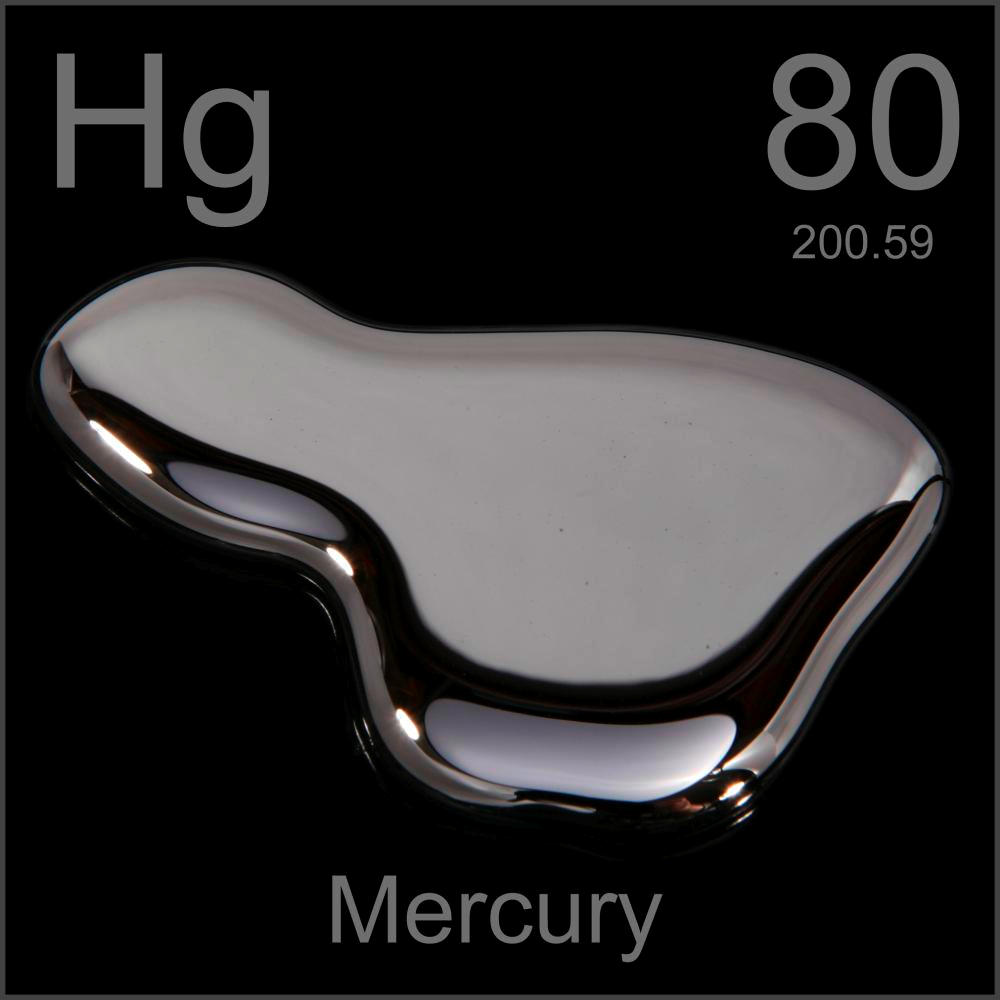
Mercury,
Hg, is a metallic element that is liquid at standard temperatures and pressure.
It is a poor conductor of heat, but conducts electricity. This element is most
commonly used in thermometers, barometers, batteries, dental amalgams, and
switches for electrical apparatus. Although humans do use it, all forms of Mercury
are considered to be dangerous, particularly methylmercury, causing a decrease
in the use of this element. However, we are unable to completely eliminate
intake of Mercury as it is widespread in the environment. Micro-organisms in
polluted waters can produce methylmercury, which then can be absorbed by the
fish, leading to humans along the food chain. If too much is ingested, mercury
can have a negative effect on the central nervous system.
Mercury can be found in most
deposits throughout the world as cinnabar, mercuric sulfide. These deposits are
mostly found in Spain and Italy, containing around 50% of the supply of
Mercury. There are also some mines in Alaska. In order to mine for it, the
cinnabar must be heated in an air current, condensing the vapour, which in
turn, produces the purist form of mercuric sulfide in the red pigment
vermilion. Once Mercury is extracted, it easily forms alloys, called amalgans,
with gold, silver, and tin. Today, it is useful to recover gold from ores and
manufacture sodium hydroxide and chlorine. These uses are some of the only ones
left for this dangerous metal.
This map illustrates the Mercury emissions globally

Sources:


